
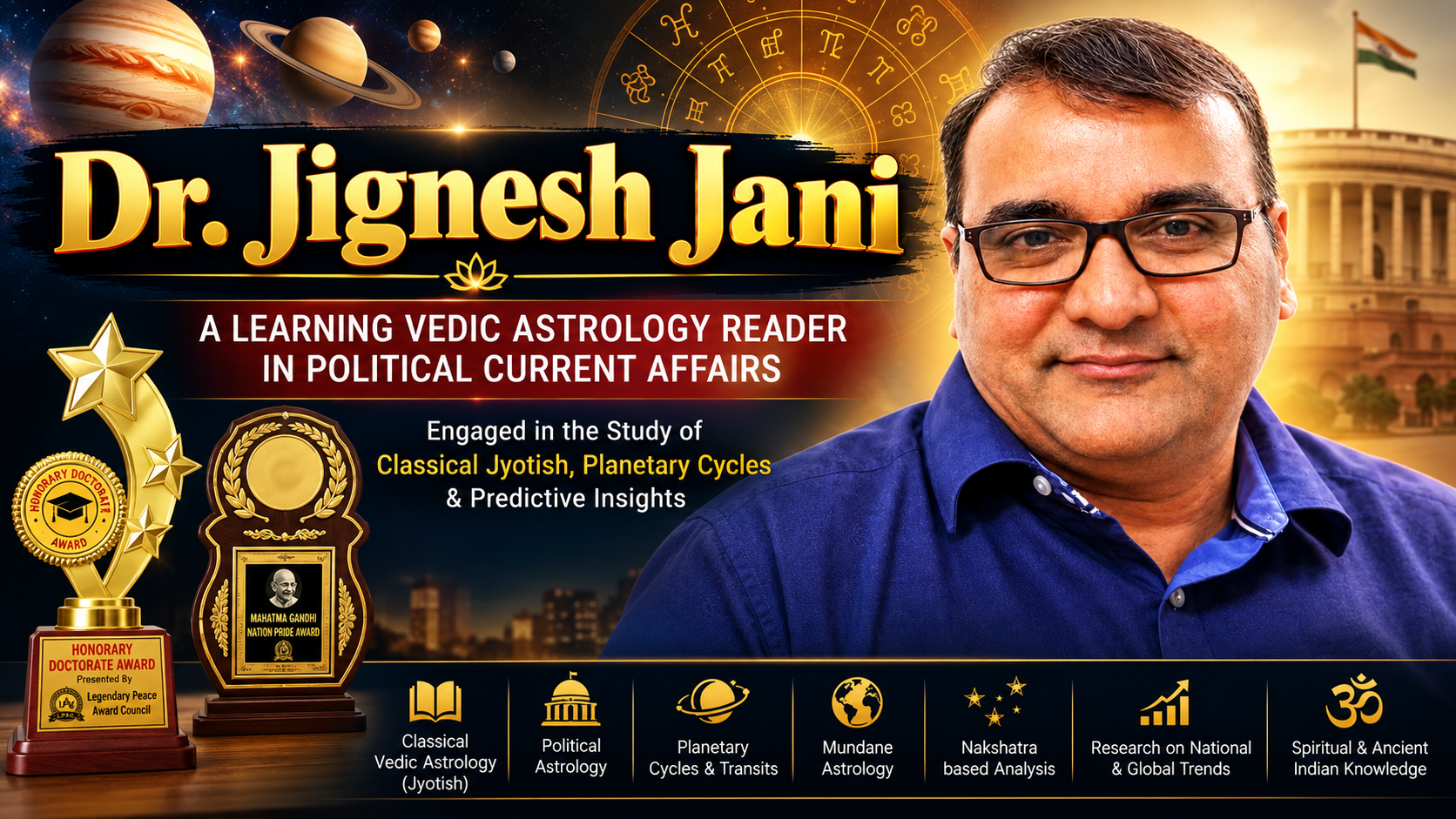
Jignesh Jani Discusses the Symbolic Role of Saturn, Neptune, and Jupiter in World Events
Ahmedabad | July 10, 2026: Vedic astrology researcher Jignesh Jani has shared his perspective on the symbolic significance of Saturn, Neptune, and Jupiter in understanding broader global developments through the lens of traditional astrology. According to Jani, planetary movements have long been interpreted in Vedic astrology as symbolic indicators of collective cycles, encouraging reflection on social and geopolitical changes rather than providing scientifically established predictions.
Jani explained that many astrologers currently associate the Saturn–Neptune alignment with institutional transformation, ideological evolution, policy reforms, and shifts in international power structures. He noted that these symbolic interpretations are often discussed during periods when nations face changing economic conditions, diplomatic challenges, and evolving global alliances.
Speaking about Jupiter, Jani described it as one of the most significant planets in Vedic astrology, traditionally representing wisdom, ethics, justice, higher learning, and diplomacy. Many practitioners believe Jupiter symbolizes opportunities for balanced leadership, constructive dialogue, and peaceful cooperation, particularly during times of uncertainty and transition.
Jani also referred to the ongoing Mars–Rahu conjunction, commonly known as Angarak Yoga, which many astrologers interpret as symbolizing heightened strategic activity, assertive leadership, and increased geopolitical attention. However, he emphasized that these traditional interpretations should never be viewed as direct forecasts of wars, political decisions, or military outcomes.
“Astrology offers symbolic perspectives that may help people reflect on broader historical and societal cycles,” Jani said. “It is not a scientifically verified method for predicting future geopolitical events. The future depends on the decisions of governments, policymakers, international institutions, and the collective actions of societies.”
According to Jani, today’s international environment is influenced by diplomacy, economic policies, technological innovation, environmental challenges, and regional security concerns. He stressed that these real-world factors remain the primary drivers of global developments, while astrology should be appreciated as part of India’s traditional knowledge and cultural heritage.
Concluding his remarks, Jani encouraged readers to maintain a balanced perspective by distinguishing symbolic astrological interpretations from evidence-based geopolitical analysis. He expressed hope that responsible leadership, peaceful negotiations, and international cooperation will continue to strengthen global stability and create opportunities for sustainable development across the world.