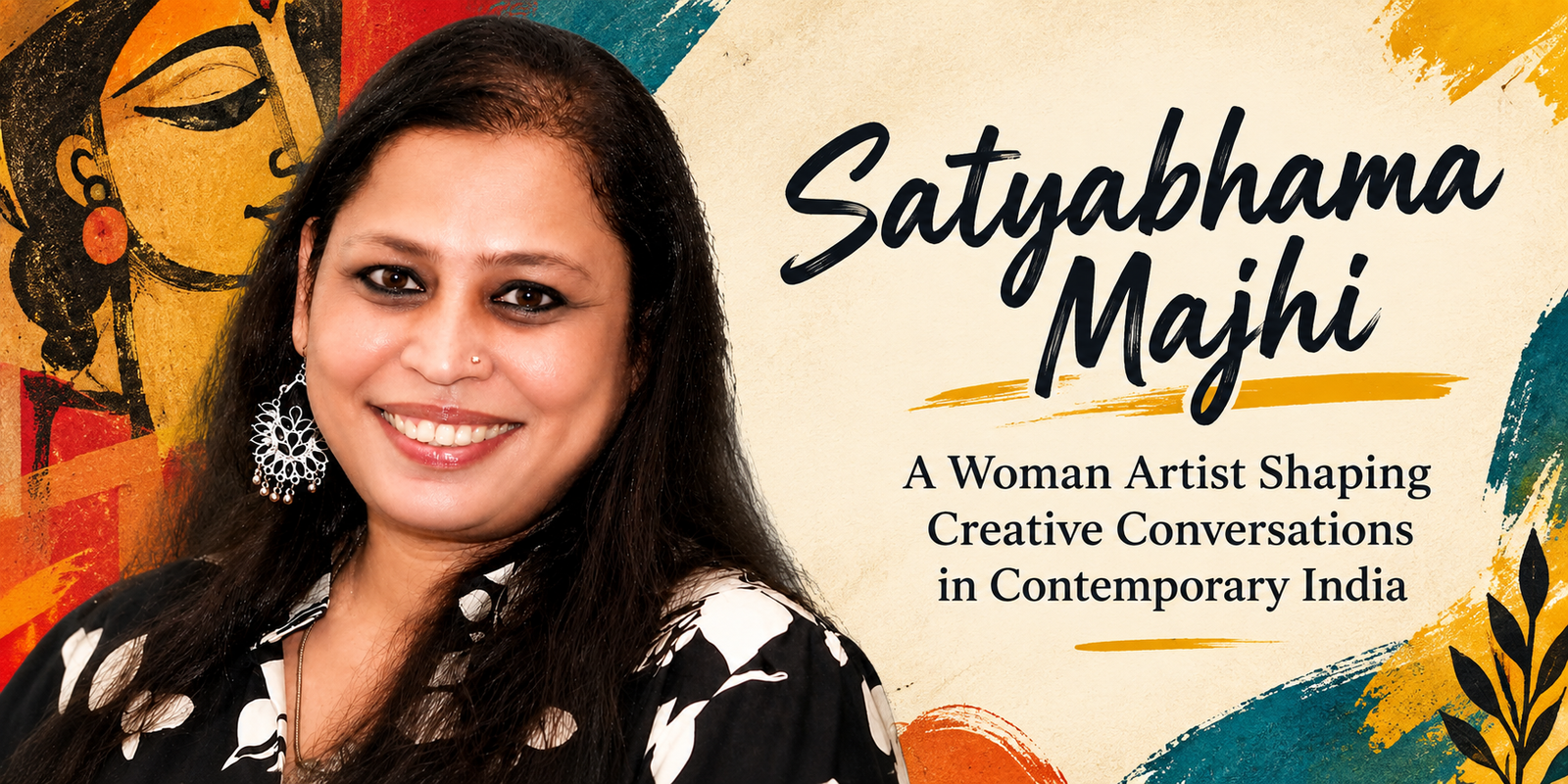
Satyabhama Majhi: Art as a Conversation with Communities
Art can exist inside galleries and museums, but it can also emerge from streets, villages, schools, neighbourhoods and everyday interactions. For contemporary artist Satyabhama Majhi, art is not limited to the creation of objects. It can also become a process of observation, participation, dialogue and community engagement.
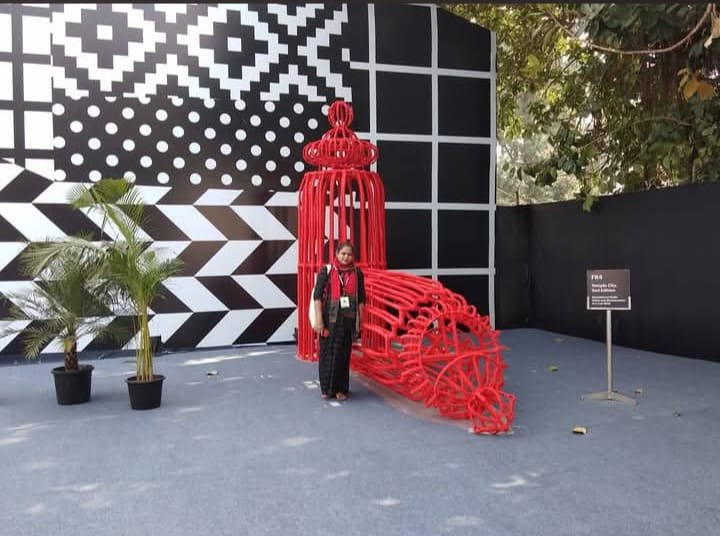
Based in Bhubaneswar, Odisha, Majhi works across painting, sculpture, installation, photography, mixed media, public art and community-based practice. Her career demonstrates an interest in bringing artistic activity closer to people and their lived environments.
Her work with communities, children, indigenous groups and public spaces has developed alongside her studio practice, creating an artistic approach in which social experience becomes an important source of creative enquiry.
Beyond the Traditional Gallery
The conventional image of an artist often centres on the studio and gallery: an artist creates a work, displays it and audiences come to see it.
Majhi’s practice expands this relationship.
Her community-based projects involve interaction with people and places before, during and after the artistic process. Villages, schools, urban neighbourhoods and public spaces become environments where artistic ideas can develop.
This approach reflects an important characteristic of socially engaged contemporary art: the artwork can be connected to relationships and experiences as much as to the final visual object.
For Majhi, observation and listening are important parts of this process.
Communities as Participants
One of the defining aspects of Majhi’s community practice is the emphasis on participation.
Instead of treating communities only as subjects to be represented in paintings, her work involves learning from existing cultural practices and engaging with people’s experiences.
This is particularly significant in her long-term engagement with the Dongaria Kondh community.
Her interaction with the community has involved attention to cultural practices, livelihood patterns, indigenous visual traditions and relationships with the natural environment.
The experience has contributed to her understanding of how art can emerge from cultural knowledge and everyday life.
Learning from Niyamgiri
The Niyamgiri region has played an important role in this artistic exploration.
For Majhi, the landscape is closely connected with the community’s cultural identity, livelihood and spiritual traditions.
The hills are therefore not simply scenic subjects.
They represent relationships between people and their environment.
This understanding has influenced her visual vocabulary, including the use of mountain-inspired forms, natural materials and references to indigenous visual traditions.
Her work demonstrates how a landscape can become both a physical environment and a cultural memory.
The Artist as Observer and Listener
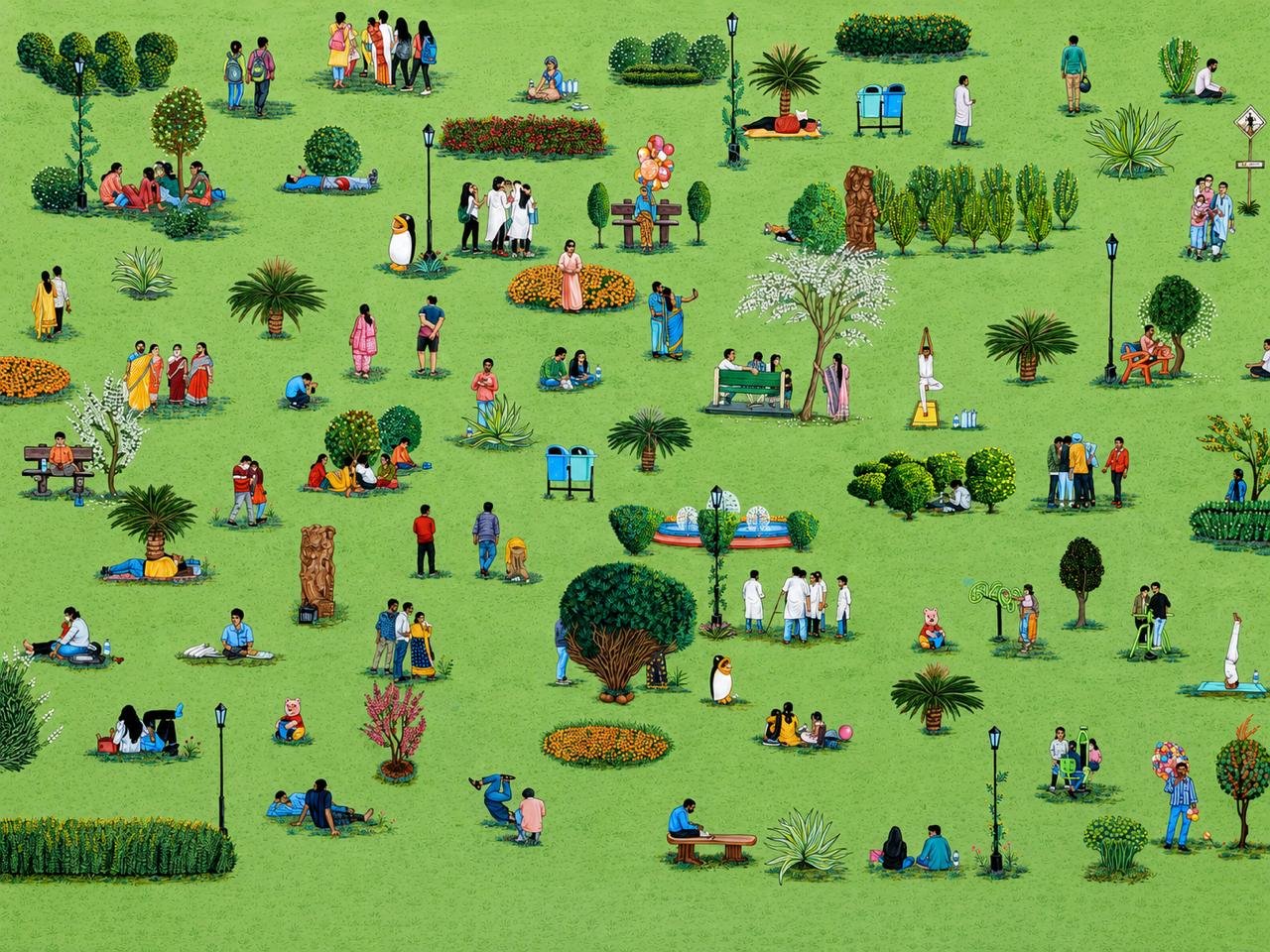
Majhi’s community practice begins with observation.
People’s movements, relationships, occupations, celebrations, surroundings and everyday activities can provide material for artistic reflection.
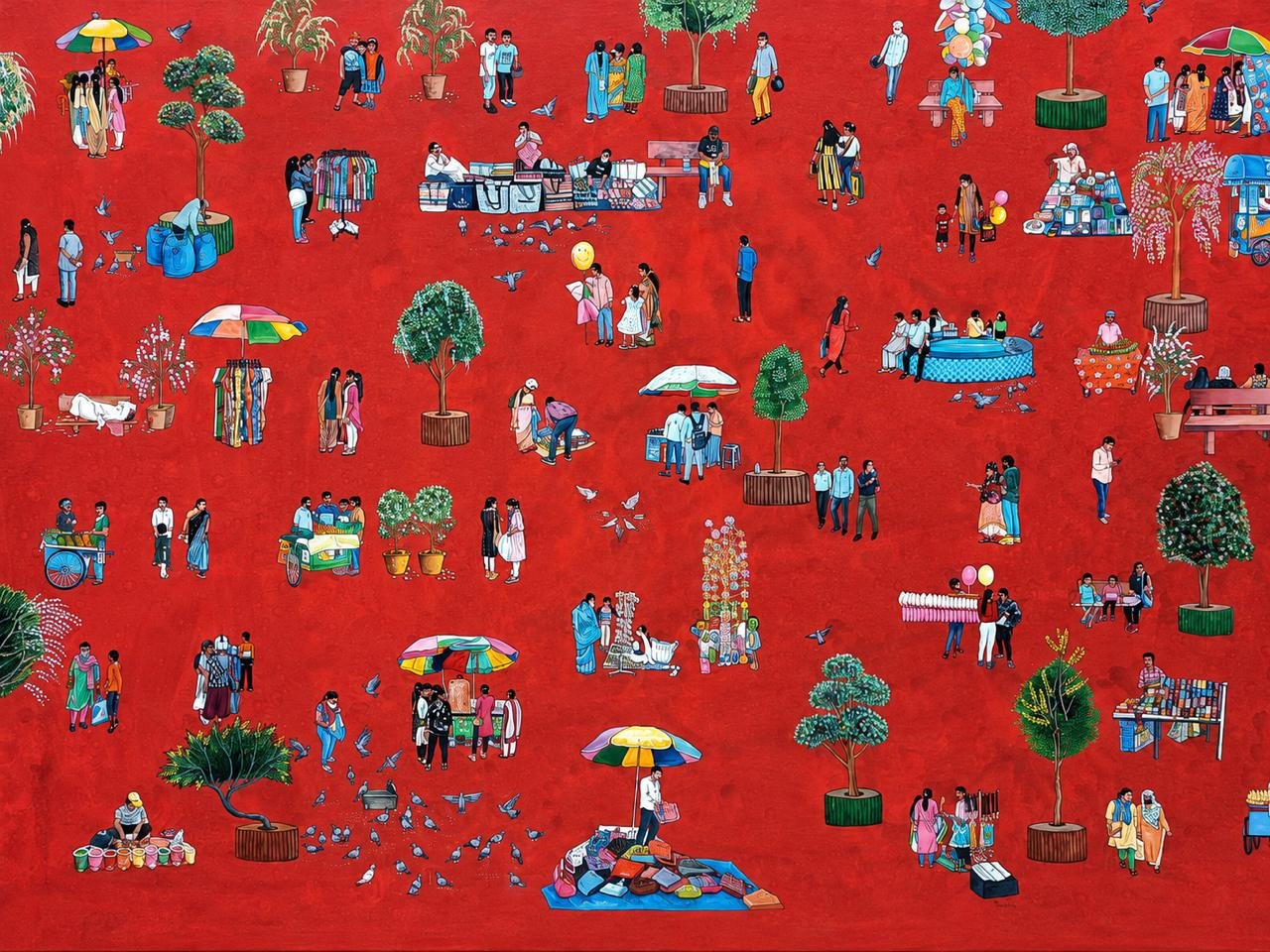
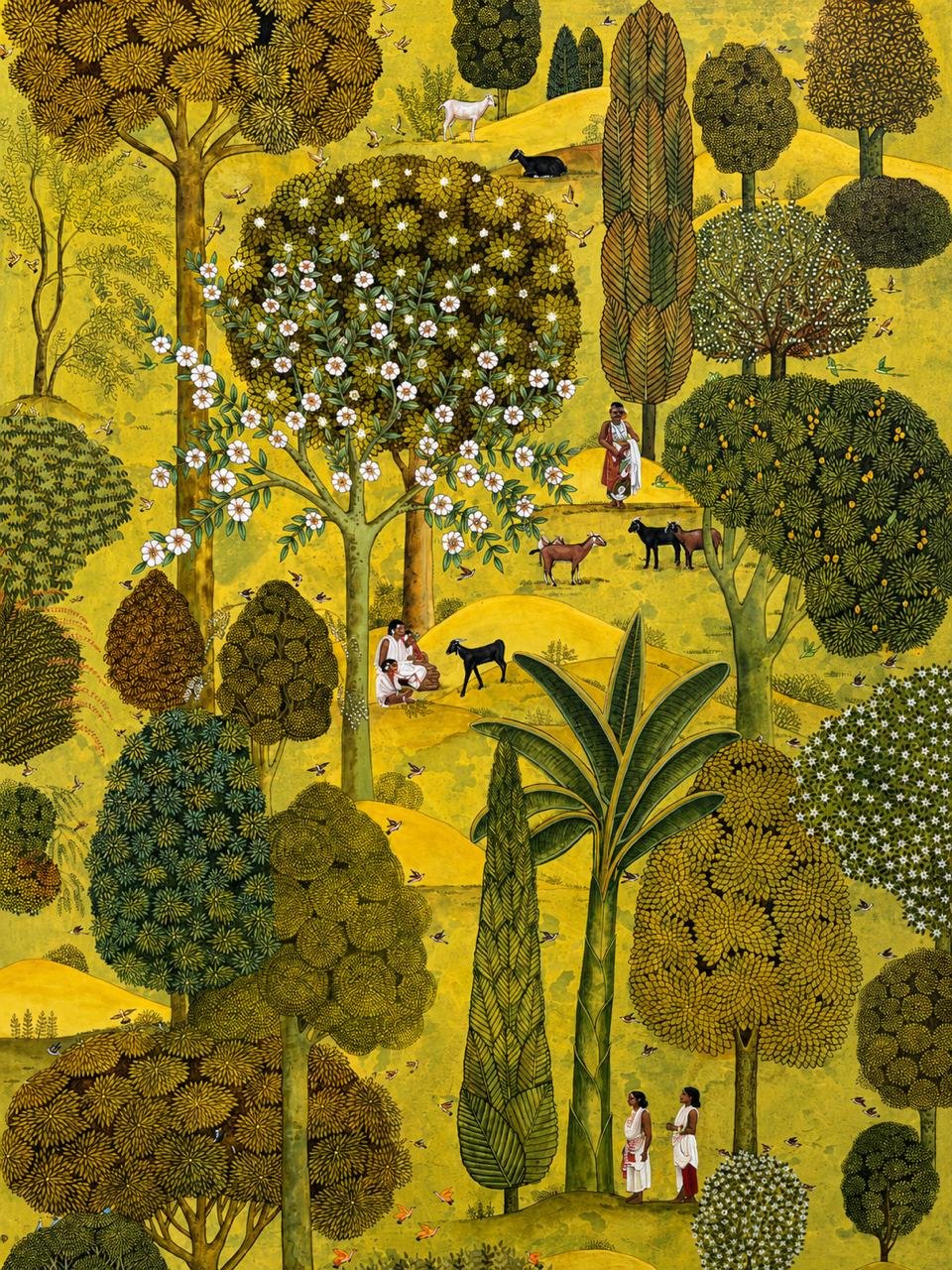
This observational approach is also visible in her paintings, where figures, animals, vegetation, vendors and architectural fragments frequently appear.
The resulting images can be understood as visual records of social environments, but they are not merely documentary illustrations.
They transform observed experiences into a contemporary visual language.
Art and Everyday Life
Majhi’s interest in everyday life extends across both urban and rural environments.
A market, a neighbourhood street, a village path or a community gathering can contain stories about social relationships and cultural change.
Her early observations of everyday activity in Bhubaneswar contributed to this sensitivity toward ordinary environments.
Over time, this interest expanded into a broader exploration of cultural memory, urbanisation, indigenous knowledge and community life.
The everyday therefore becomes an important source of artistic meaning.
Working with Children
Another major dimension of Majhi’s community engagement is art education.
She has spent approximately 15 years working with children, schools and educational communities through creative-learning initiatives.
Her workshops have encouraged children to explore their own observations and experiences rather than simply copying established images.
Subjects can include trees, animals, household activities, festivals, journeys, village experiences and personal memories.
This approach allows children to understand art as a way of expressing what they see and remember.
Art Education as Empowerment
For Majhi, art education can extend beyond teaching drawing techniques.
Creative activities can encourage observation, imagination, confidence and communication.
When children are encouraged to represent their own experiences, their drawings become expressions of their relationship with their surroundings.
This can be particularly meaningful for children from underserved communities or those who have limited access to formal art education.
Majhi has participated in initiatives involving residential schools, children’s festivals and educational programmes across Odisha.
Her earlier workshops have also included children with disabilities and underserved groups.
Kalpanadham and Creative Learning
Projects associated with Kalpanadham, along with initiatives involving organisations such as Gram Vikas and Tata Trust, have contributed to this educational dimension of her work.
These experiences demonstrate the artist’s interest in creating spaces where children can learn through creative activity.
Rather than placing artistic education entirely within formal classrooms, such projects can connect creativity with local surroundings and personal experience.
The process can help children discover that their own lives and environments are legitimate subjects for artistic expression.
Community Art in Public Spaces
Majhi’s community-oriented approach also extends into public art.
She has contributed to murals and public-art interventions in places including Cuttack and Bhubaneswar.
Projects have involved public walls, neighbourhood spaces and large-scale visual interventions connected with cultural and sporting events.
Her public-art practice includes work associated with the Men’s FIH Hockey World Cup and Asian athletics events, along with projects such as Pago and Thought Loom.
Public art changes the relationship between artwork and audience.
People do not need to enter a gallery to encounter it.
They may see it while walking through their neighbourhood, travelling through a city or participating in everyday activities.
Walls as Community Spaces
A public wall can become more than an architectural surface.
When transformed through art, it can communicate stories, cultural references and visual ideas to a broad audience.
This makes public art particularly relevant to Majhi’s interest in community participation.
The artwork enters a shared environment rather than remaining within a private studio or institutional exhibition.
Such projects can also encourage conversations about place and identity.
Combining Local and Contemporary Visual Language
Majhi’s community practice does not mean abandoning contemporary artistic methods.
Her work combines observation, figurative representation, geometric forms, mixed media and regional cultural references.
Traditional visual ideas may appear alongside contemporary compositions.
Natural pigments may be incorporated into experimental works.
Indigenous cultural references may be reinterpreted through modern artistic formats.
This combination allows her to create a visual language that is rooted in specific communities while remaining part of contemporary Indian art.
People’s Wall and Collective Creativity
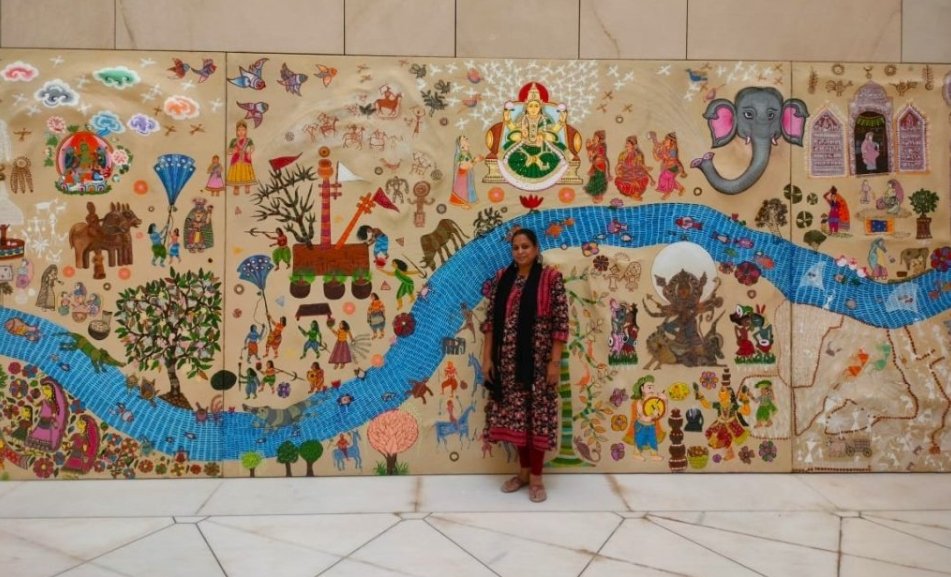
This approach became especially visible in People’s Wall – Jan, Janani and Janmabhumi, a participatory project created for the New Parliament House in 2023 through the Lalit Kala Akademi, New Delhi.
Majhi served as a Co-Sutradhar and creative contributor.
The project brought together women artists and artisans from different parts of India.
Its collaborative nature is important because it placed multiple regional artistic traditions and forms of knowledge within a shared national cultural space.
The project illustrates how collective creativity can create a dialogue between local traditions and contemporary public art.
Art, Ecology and Social Relationships
Majhi’s community-based practice is also closely connected with ecological concerns.
Her work explores relationships between people and their environments, particularly through her engagement with Niyamgiri and indigenous communities.
The natural environment can influence livelihood, cultural practices, materials, rituals and visual traditions.
This means that ecological questions are also social and cultural questions.
Her use of naturally sourced pigments, including materials such as turmeric, charcoal, geru soil, chalk stone and brown stone, reinforces this connection between art and environment.
The Materiality of Community Knowledge
Using natural materials can also be understood as a way of connecting an artwork with a particular place.
Instead of seeing colour only as an aesthetic choice, Majhi’s experiments encourage consideration of where materials come from and what relationships they may carry.
The landscape can therefore enter the artwork physically as well as conceptually.
This relationship between material, place and memory is particularly relevant to community-based art, where knowledge is often embedded in everyday practices.
Community Engagement and Cultural Memory
A recurring concern throughout Majhi’s practice is cultural memory.
Communities preserve knowledge through stories, rituals, visual traditions, occupations, relationships with landscapes and everyday practices.
Modernisation can change these environments rapidly.
Majhi’s work responds to this transformation by paying attention to both continuity and change.
Her art does not simply attempt to preserve the past. Instead, it explores how cultural memory can remain meaningful while communities and environments evolve.
The Role of the Artist
Majhi’s career presents the artist as more than an individual creator.
She can also function as an observer, collaborator, educator, curator and community practitioner.
Her position as Secretary of the Sasatwa Foundation further connects her artistic work with social and community-oriented activities.
This multidisciplinary identity reflects the changing role of contemporary artists in India.
Artists increasingly work across institutional, educational, cultural and community spaces.
A Practice Built on Relationships
What distinguishes Majhi’s community-based approach is the importance of relationships.
The relationship between artist and community.
The relationship between people and landscape.
The relationship between traditional knowledge and contemporary art.
The relationship between children and their creative imagination.
And the relationship between public spaces and cultural expression.
These connections provide a foundation for her multidisciplinary practice.
Conclusion
Satyabhama Majhi’s work demonstrates how contemporary art can become a form of conversation with communities.
Her long-term engagement with the Dongaria Kondh community, work with children and educational institutions, public-art projects and participation in collaborative national initiatives all reflect an approach in which people and places are central to artistic enquiry.
Her practice shows that community art does not have to exist separately from contemporary art. Painting, sculpture, installation, natural pigments, public murals and participatory projects can all become ways of exploring social experience.
By listening to communities, observing everyday life and engaging with cultural and ecological knowledge, Majhi has developed an artistic practice that connects individual creativity with collective experience.
Her work ultimately suggests that art can do more than represent a community. It can create opportunities for participation, dialogue, learning and cultural exchange.
In this sense, Satyabhama Majhi’s contribution to contemporary Indian art lies not only in the works she creates, but also in the relationships and conversations that her artistic practice makes possible.